Standing in a pharmacy aisle, travellers face dozens of mosquito repellent options: DEET formulations at varying concentrations, natural citronella sprays promising « chemical-free » protection, wearable accessories such as a set of 2 mosquito repellent refills for PARAKITO bracelets, and products like Icaridin or IR3535. The price range spans £4 to £18. Which genuinely works?
The uncomfortable truth: most purchasing decisions in this category are driven by marketing claims rather than evidence. A 50% DEET product sits beside a « natural plant oil blend » with identical packaging confidence, yet their real-world performance differs by a factor of six to eight hours. Regulatory data reveals that active ingredient identity determines efficacy far more than brand, price, or organic certification.
Mosquitoes locate human hosts through a sophisticated detection system combining carbon dioxide exhalation detectable from 30 metres, body odour compounds—particularly lactic acid and ammonia from perspiration—and heat signatures. Female mosquitoes, the only ones that bite, evolved this targeting mechanism over millions of years. In malaria-endemic zones, dengue outbreak regions, or areas with Zika transmission, choosing the right repellent becomes a genuine health protection decision rather than mere comfort consideration.
Field trials published by the World Health Organization and Centers for Disease Control consistently demonstrate measurable, reproducible differences in protection duration—differences that matter profoundly when the consequence is exposure to vector-borne disease. This guide translates peer-reviewed efficacy data and regulatory guidance into actionable selection criteria, cutting through the wellness industry’s vagueness to answer the question that actually matters: which formulations deliver reliable protection, and for how long?
Your protection priorities: what genuinely matters in repellent choice
- Active ingredient identity (DEET, Icaridin, IR3535) determines efficacy far more than brand or price
- Protection duration: synthetic actives deliver 4-6 hours, plant-based options typically under an hour
- Under-application creating incomplete coverage is the primary cause of real-world product « failure »
- Concentration above 30% DEET yields diminishing marginal protection gains
- Vulnerable groups (infants, pregnancy, eczema) require specific active ingredient matching and professional guidance for high-risk destinations
The chemistry behind lasting protection: what makes repellents effective
Picture a family packing for a fortnight’s holiday in the Greek islands. Standing in the pharmacy aisle, they face dozens of mosquito repellent options with wildly different price points and claims. Which genuinely works? The answer lies in understanding how repellents function at molecular level.
Effective repellents disrupt mosquito detection through two primary mechanisms. The vapour barrier mechanism creates a zone of volatile compounds on the skin surface that confuses olfactory receptors on mosquito antennae, masking the attractive chemical signals humans emit. Think of it as olfactory camouflage rather than a physical barrier. Regulatory data indicates this protective zone extends only 4-6 centimetres from treated skin, which explains why incomplete coverage—even a small gap on an ankle—allows bites to occur.
The critical determinant of whether this protection lasts 45 minutes or 6 hours is active ingredient concentration and chemical persistence. Volatile compounds evaporate; perspiration dilutes them; friction from clothing removes them. Formulations engineered for extended duration either use higher concentrations of proven actives or incorporate slow-release technologies that maintain effective surface concentrations despite environmental degradation. This is why product comparisons based on price per millilitre miss the point entirely—a £6 bottle offering verified protection represents better value than a £12 « natural » alternative requiring constant reapplication.
Decoding active ingredients: the evidence gap between marketing and reality
The World Health Organization evaluates repellent active ingredients through standardised field trials measuring complete protection time—the duration until the first confirmed mosquito bite. Four synthetic compounds have accumulated decades of peer-reviewed evidence demonstrating reliably long protection. Plant-derived alternatives show consistently shorter performance in these same protocols.
| Active Ingredient | Typical Concentration | Protection Duration | Regulatory Approval | Key Considerations |
|---|---|---|---|---|
| DEET | 10-50% | 3-6 hours | WHO/EU BPR/EPA | Decades of field data, age restrictions under 2 months |
| Icaridin (Picaridin) | 10-20% | 4-6 hours | WHO/EU BPR/EPA | Better skin tolerance, variable age guidance 2-6 months |
| IR3535 | 10-30% | 2-4 hours | EU BPR/EPA | Pregnancy-safe profile, sustained-release formulations extend protection |
| PMD (Lemon Eucalyptus) | 30-40% | 2-3 hours | EPA (not for under 3 years) | Botanical origin with evidence base, shorter duration than synthetic options |
| Citronella / Essential Oils | Variable | Brief duration | Limited/None | Minimal peer-reviewed efficacy data, frequent reapplication required |
DEET: the gold standard with decades of field data
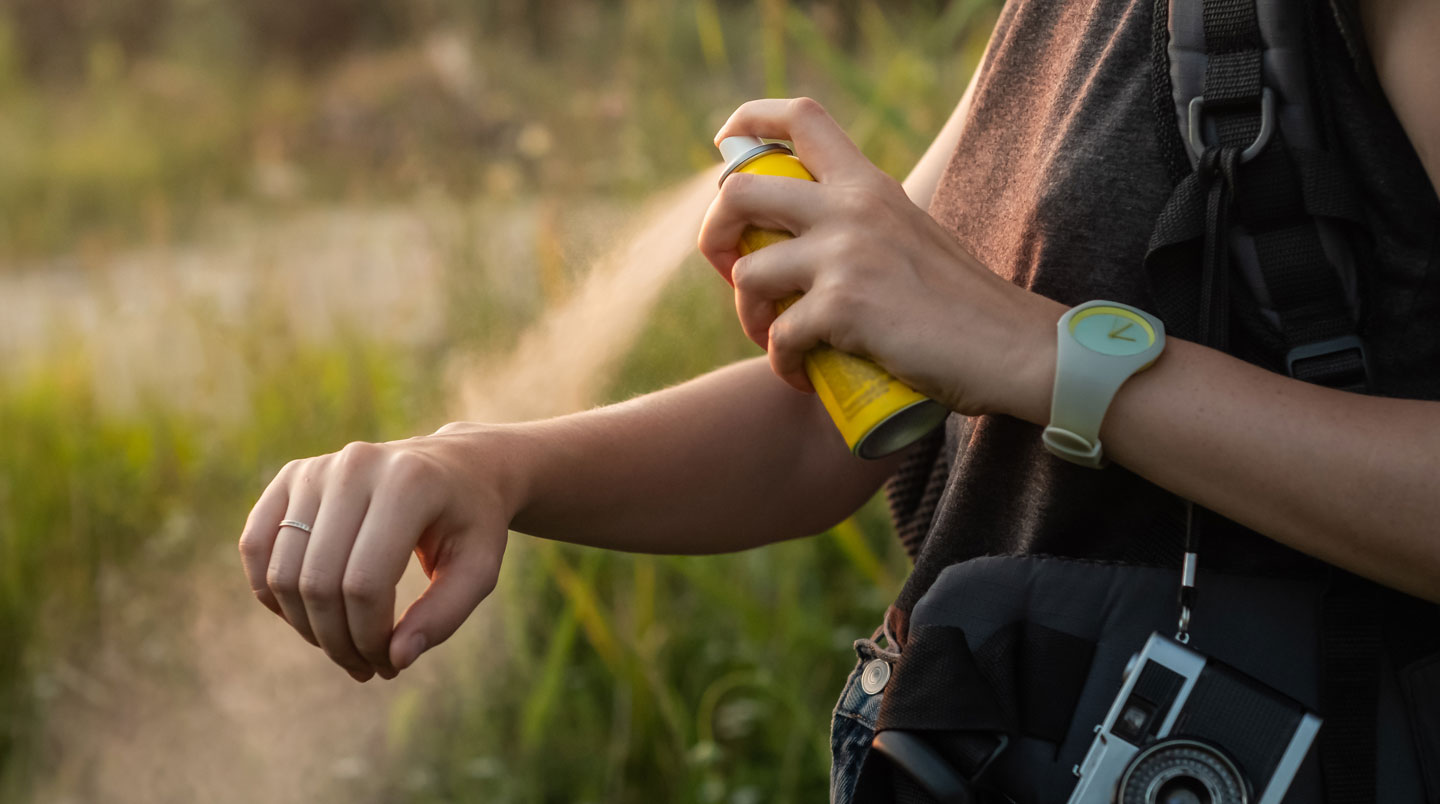
N,N-Diethyl-meta-toluamide remains the most extensively studied repellent active ingredient, with efficacy data spanning over 70 years of military and civilian use. A comprehensive NIH-supported review on pregnancy repellent safety indicates that formulations containing 15-30% DEET provide extended protection, whilst lower concentrations may only deliver a few hours. The evidence base strongly supports concentration-dependent duration.
The CDC Yellow Book 2025 guidance specifies that DEET efficacy tends to peak at approximately 50% concentration, with formulations above that threshold offering no marked increase in protection time. For most UK travellers to Mediterranean or moderate-risk destinations, a 20-30% DEET formulation offers sufficient duration—reserve 50% concentrations for environments requiring extended protection without reapplication opportunity.
Icaridin and IR3535: effective alternatives without the stigma
Icaridin (also marketed as Picaridin) emerged as a DEET alternative in the 1980s and has since accumulated compelling efficacy evidence. The same NIH-supported pregnancy safety review notes that 10-20% Picaridin formulations provide extended protection and perform at least as effectively as DEET at comparable concentrations. Field studies demonstrate that Icaridin matches DEET’s duration whilst causing fewer reported skin reactions.
IR3535, a synthetic amino acid derivative, offers a pregnancy-safe profile explicitly endorsed by CDC and ACOG for vector-borne disease prevention. A 2025 field trial published in Parasites & Vectors conducted in Ghana demonstrated that 20% IR3535 with sustained-release technology reduced mosquito bites by 98% compared to control groups, matching the reduction achieved by 25% DEET—and both formulations sustained protection under real-world African conditions against Anopheles gambiae, the primary malaria vector.
Natural oils and citronella: understanding the performance limitations
Plant-derived repellents, particularly citronella oil, geraniol, and various essential oil blends, dominate the « natural wellness » segment. The honest evidence assessment: peer-reviewed efficacy studies consistently document significantly shorter protection durations for these formulations compared to WHO-approved synthetic actives. Field trials measuring complete protection time reveal that natural oils’ high volatility causes rapid evaporation, degrading the protective vapour barrier quickly.
PMD (para-Menthane-3,8-diol), refined from lemon eucalyptus, represents the most evidence-supported botanical option with EPA registration. For low-risk environments—an evening garden party, a brief lakeside walk—natural repellents serve perfectly well. For destinations where mosquito-borne disease transmission poses genuine risk, the evidence base unambiguously favours regulatory-approved synthetic actives.
Format matters: sprays, lotions, wearables and their real-world trade-offs
Repellent efficacy depends not only on active ingredient selection but on delivery format. Aerosol sprays offer the fastest application and easiest coverage of large surface areas, though airport security’s 100ml liquid restriction for carry-on baggage limits convenience. Pump sprays and lotions avoid this constraint and allow more controlled dosing. Roll-on formats provide portability and spill-proof convenience but cover smaller areas slowly.
The format genuinely affecting efficacy debates centres on spatial repellent devices: wristbands, ankle bands, and clip-on diffusers that release repellent compounds into the air rather than applying them directly to skin. The CDC Yellow Book 2025 guidance explicitly notes that spatial repellent devices have not been adequately evaluated through peer-reviewed studies for efficacy in preventing vector-borne diseases. The evidence gap matters: whilst topical formulations create a consistent vapour barrier across treated skin, spatial devices depend heavily on environmental conditions.
That said, practical realities favour format flexibility for specific populations. Young children often resist topical application. For families seeking convenient supplementary protection in lower-risk environments, wearable diffusers and wristbands containing essential oils offer a practical, spill-proof alternative that requires no direct skin contact. The evidence-based perspective: treat wearables as a complement to—not replacement for—comprehensive topical application when travelling to regions with disease transmission.
Format also affects user compliance, which ultimately determines real-world protection. A formulation offering extended laboratory-measured efficacy fails entirely if left in the suitcase because the user finds the texture unpleasant. Matching format to individual tolerance achieves better practical outcomes than insisting on theoretically optimal choices users won’t actually apply.
Concentration percentages, reapplication timing and the mistakes that reduce protection
Concentration percentages dominate purchasing decisions, yet consumer behaviour reveals a critical application error that undermines even the most potent formulations. The « more is better » concentration assumption leads buyers toward 50% DEET products when 20-30% formulations would suffice—but the genuine efficacy killer is under-application of any concentration.
The coverage gap: why most repellent « fails » in practice
Consumer observations consistently identify a critical application error: users typically apply substantially less than the recommended repellent quantity. This under-application error creates gaps in the protective vapour barrier, allowing mosquitoes to detect and bite through the incomplete coverage. Correct application requires more product than feels intuitive—approximately 3ml for exposed arms and legs of an average adult.
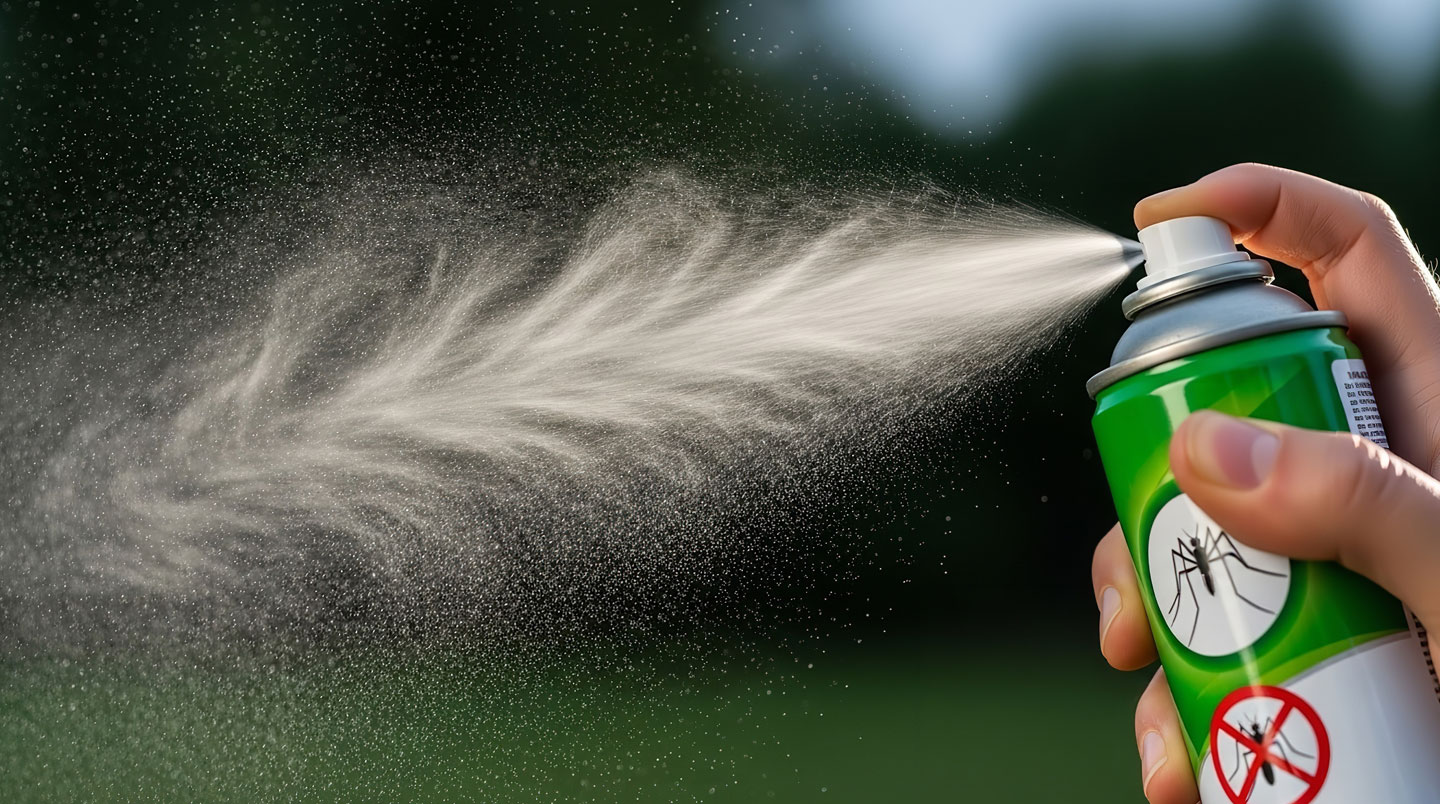
Concentration myths persist: doubling DEET percentage does not double protection duration. As CDC guidance confirms, efficacy peaks around 50% with no marked marginal gains beyond that threshold. For travellers able to reapply regularly, moderate concentrations optimise the safety-efficacy balance. Reserve maximum concentrations for scenarios genuinely requiring extended single-application protection: overnight outdoor exposure, remote trekking where reapplication is impractical, or high-density mosquito environments.
Reapplication timing depends on activity level and environmental exposure more than stated product duration. Perspiration dilutes repellent concentration; swimming removes it entirely regardless of « water-resistant » claims. Field evidence suggests halving the stated duration for high-activity contexts.
-
Apply sunscreen first if required; wait 15-20 minutes for absorption before repellent to avoid formulation interactions
-
Use approximately 3ml for both arms, 3ml for both legs of average adult—more than typical instinct suggests
-
Spread evenly across all exposed skin; do not miss commonly forgotten areas (backs of hands, ankles, behind ears)
-
For face application: spray on hands first, then apply carefully avoiding eyes and mouth
-
Time your reapplication based on activity level: sedentary use follows stated duration, active/sweating requires earlier renewal, immediately after swimming
-
Higher concentration does not eliminate reapplication need—activity and environmental factors still require renewal
Safety profiles: matching repellent choice to age, skin sensitivity and pregnancy
Vulnerable populations require tailored repellent selection beyond simple efficacy calculations. Infants under 2 months should avoid topical repellents entirely, relying instead on physical barriers—mosquito netting over prams, protective clothing, screened sleeping environments. Between 2-6 months, age restrictions vary by active ingredient and national regulatory framework: DEET typically permits use from 2 months in the UK, whilst Icaridin age guidance ranges from 2-6 months depending on product authorisation. Always verify the specific product label rather than assuming category-wide permissions.
Pregnancy safety data consistently supports repellent use as essential vector-borne disease prevention. CDC, ACOG, and UK NHS guidance explicitly recommend insect repellents for pregnant and breastfeeding individuals travelling to or residing in areas with malaria, dengue, Zika, or other mosquito-transmitted infections. IR3535, Icaridin, and low-to-moderate concentration DEET all show reassuring safety profiles based on available evidence. High-risk destinations require professional risk-benefit assessment: the teratogenic risks of Zika infection during pregnancy vastly outweigh theoretical concerns about repellent exposure, making comprehensive protection non-negotiable.
Skin sensitivity and conditions like eczema require careful active ingredient selection. Infants with compromised skin barrier function, including those prone to eczema, may experience increased sensitivity to certain repellent formulations. Dermatological guidance suggests Icaridin or IR3535 as preferable to DEET for this population, given lower reported irritation rates. Test any new repellent on a small skin area 24 hours before full application, particularly for children with atopic dermatitis or known contact sensitivities.

-
Infant under 6 months:
Avoid topical repellents entirely; use physical barriers (mosquito netting, protective clothing). Consult GP or travel health clinic if travel to high-risk destination unavoidable. Source: NHS infant care guidance, CDC traveller health.
-
Child 6 months to 2 years:
DEET 10-30% or Icaridin 10-20% (verify product age authorisation on label). Apply to adult hands first, then to child. Avoid hands and face areas child may touch or lick. Frequency: maximum once daily unless high-risk zone requires more frequent protection. Source: NHS, CDC paediatric guidance.
-
Pregnant (any trimester):
IR3535, Icaridin or low-concentration DEET (10-20%) considered safe based on available data and explicitly recommended by CDC and ACOG for vector-borne disease prevention. High-risk destinations (malaria zones): consult travel health clinic for risk-benefit assessment balancing infection risks against repellent exposure. Source: NHS pregnancy guidance, ECDC travel health.
-
Eczema or sensitive skin:
Icaridin or IR3535 generally better tolerated than DEET based on dermatological observations. Test on small skin area 24 hours before full application. Consider barrier cream underneath if dermatologist-approved. Avoid application to broken or actively inflamed skin. Source: Dermatological practice guidelines.
Effective mosquito protection begins with honest assessment of destination risk and duration of exposure, then matches active ingredient and format to individual circumstances rather than marketing claims. Field trials published across seven decades consistently demonstrate that DEET, Icaridin, and IR3535 at appropriate concentrations deliver reliable, measurable protection lasting hours rather than minutes. Natural alternatives serve well in low-risk contexts but require realistic expectations about reapplication frequency when disease transmission is a genuine concern.
The most sophisticated formulation fails if under-applied, which consumer research reveals as common practice. Thorough coverage with adequate product quantity matters more than chasing maximum concentration percentages. For families with young children, format flexibility—wearable devices as supplementary protection, child-friendly lotions, travel-compliant sizes—supports consistent use, which ultimately determines real-world protection outcomes far more than theoretical efficacy measured in laboratory conditions.
Is DEET actually safe for children, or should I only use natural alternatives?
DEET has decades of safety data and regulatory approval (WHO, EPA, EU BPR) for paediatric use above specific age thresholds (typically 6 months to 2 years depending on jurisdiction and concentration). Natural alternatives like citronella offer significantly shorter protection, requiring very frequent reapplication that may be impractical and result in gaps in coverage. For high-risk destinations where mosquito-borne disease poses genuine threat, regulatory-approved synthetic actives (DEET 10-30%, Icaridin) provide far more reliable protection for children than plant-based options with limited efficacy data.
Do those mosquito repellent bracelets and clip-on devices actually work?
The peer-reviewed evidence base for wearable spatial repellent devices (bracelets, clip-ons) is considerably weaker than for topical skin-applied formulations. CDC Yellow Book 2025 guidance explicitly notes that spatial devices have not been adequately evaluated through peer-reviewed studies for preventing vector-borne diseases. Efficacy depends heavily on environmental factors (wind, ventilation) and proximity to protected skin areas—typically providing very localised protection immediately around the device rather than whole-body coverage. For convenience in lower-risk environments or as supplementary protection for children who resist topical application, wearables offer practical value. However, for reliable protection in regions with disease transmission risk, topical application of WHO-approved active ingredients (DEET, Icaridin, IR3535) remains the evidence-based standard.
Does the percentage concentration really matter, or is 50% DEET just marketing?
Concentration affects protection duration, not whether mosquitoes are repelled. Field trials demonstrate that DEET 50% provides modestly longer protection compared to 20-30% formulations—the relationship is not linear: doubling concentration does not double duration. For most UK travellers to Mediterranean or moderate-risk destinations, DEET 20-30% offers sufficient duration with less skin exposure. Reserve higher concentrations (40-50%) for environments requiring extended protection without reapplication opportunity (jungle trekking, overnight outdoor exposure). The « more is better » assumption often leads to unnecessary over-exposure when reapplication discipline with moderate concentrations would achieve equivalent real-world protection.
Can I use the same product for both sunscreen and mosquito protection, or do I need separate products?
Combined sunscreen-repellent formulations are not recommended by most health authorities because the two products require different reapplication schedules. Sunscreen typically needs reapplication every 2 hours and after swimming, whilst repellent may last longer depending on active ingredient and concentration. Using a combined product forces you to either over-apply repellent (following sunscreen schedule) or under-protect from UV (following repellent schedule). The evidence-based approach: apply sunscreen first, allow 15-20 minutes for absorption, then apply repellent as a separate layer. This ensures both products function optimally without formulation interactions that may reduce efficacy of either component.
Will mosquito repellent alone protect me from malaria, or do I need something else?
Topical repellent is a critical component of mosquito-borne disease prevention but insufficient as sole protection in malaria-endemic zones. High-risk destinations require a multi-layered approach: antimalarial prophylactic medication (prescribed by GP or travel health clinic), topical repellent (DEET 30-50% or Icaridin 20%), treated bed nets for sleeping, and protective clothing during peak biting hours (dusk to dawn for malaria-transmitting Anopheles mosquitoes). Repellent use alone, even with maximum-strength DEET, cannot guarantee prevention of malaria transmission. Any traveller to Sub-Saharan Africa, parts of Southeast Asia, or other endemic regions must consult a travel health professional 6-8 weeks before departure for comprehensive prevention strategy including appropriate medication.
This guide covers general repellent effectiveness; individual skin chemistry, application technique, and environmental conditions affect real-world performance. Product formulations and regulatory approvals vary by country—always verify local availability and compliance. High-risk destinations (malaria-endemic zones, outbreak areas) require professional travel health consultation, potentially including prophylactic medication. Specific populations (infants under 2 months, pregnant women, individuals with skin conditions) need tailored medical advice before using certain active ingredients.
Consult your GP, a travel health clinic, or a pharmacist specialising in travel medicine for personalised recommendations, especially for high-risk destinations, pregnancy, or young children.